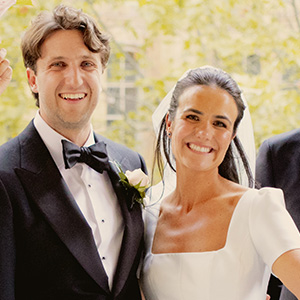
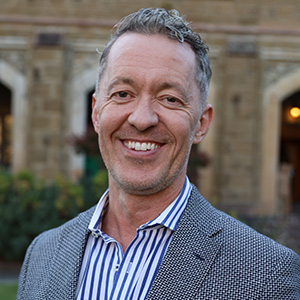
Matt works as Chief of Staff at Bare, a venture capital-backed technology company bringing end of life services into the digital age. He previously worked as a management consultant at Bain & Company in Sydney, and co-founded UK-based fast-fashion disruptor HURR.
Matt is a 果冻视频 alum and holds degrees from the University of Melbourne, the Australian National University (Burgmann), and the University of Oxford (Christ Church).
Here he lets us in on five things to know about working in the end-of-life services industry.
Funerals are just one part of the end-of-life services industry
People tend to equate 鈥榚nd-of-life services鈥� with funerals. That鈥檚 understandable, but it鈥檚 not how the end-of-life journey is experienced by individuals and families.
In reality, 鈥榚nd of life鈥� is a broad category encompassing a diverse network of critical services that become relevant well before an individual passes away, including advanced healthcare planning, estate planning, and much more. A funeral is important, but it鈥檚 just one piece of the puzzle.
I personally feel this makes a career in the end-of-life services industry more interesting and varied (and more challenging) than one might expect. On a daily basis, I鈥檓 acutely aware that the work I do will have an impact across many life stages of those we serve.
There鈥檚 no holistic end-of-life services provider
Amazon is the 鈥榚verything store鈥� for online retail. There鈥檚 no 鈥榚verything store鈥� for end-of-life services. Nothing even comes close.
Today, the end-of-life services industry is complex, fragmented and, frankly, rather broken. There鈥檚 nothing remotely resembling a 鈥榦ne-stop shop鈥� for end-of-life planning. Instead, individuals and families have to navigate through complicated and often contradictory information sources and engage with many different companies and systems that don鈥檛 interface with one another (and that have a tendency to up-sell on things that families don鈥檛 actually need). This leads to confusion, a poor customer experience, and a big hit to the bank account.
Working in the end-of-life services industry provides me the opportunity to help create a more holistic end-of-life offering 鈥� something simpler, more holistic, and more affordable. It鈥檚 needed, and I鈥檓 glad to be playing a part in bringing this to fruition.
The industry is undergoing a digital transformation
End-of-life services still fall within a 鈥榩en and paper鈥� industry. The digital transformation wave has not yet reached this particular shoreline, in contrast to industries such as media, finance, and retail. But the wave is approaching.
The end-of-life services industry is increasingly moving online, and I鈥檓 lucky to be at the forefront of that. Bare is Australia鈥檚 first genuinely tech-enabled (online) end-of-life services company. We don鈥檛 have funeral parlours, we don鈥檛 stock or sell caskets or coffins, and we are able to automate many inefficient processes. This allows us to be very affordable, and enables us to provide families with time to focus more on the things that matter, and less on things that don鈥檛.
I love that technology plays such a critical role in my work. I see firsthand the enormous value it鈥檚 generating for families and am excited by the even larger value yet to be unlocked.
There鈥檚 a cultural shift accompanying the industry鈥檚 transformation
Underlying all of the above is a shift in consumer preferences.
As an example, it鈥檚 well known that Australian preferences are shifting away from burial and towards cremation. More generally, there鈥檚 a shift away from 鈥榯raditional鈥� towards 鈥榩ersonalised鈥�.
Instead of the traditional funeral service in a chapel with an ornate coffin, and a clergy member as a celebrant, Australians are opting for more personalised options such as informal outdoor gatherings in nature, with unconventional ash-scattering ceremonies.
Traditional end-of-life services companies have an incentive to resist this change as it鈥檚 not good for business (as there鈥檚 less money to be made when there鈥檚 no venue booking, no coffin, lower professional service fees etc.).
I鈥檓 fortunate to be working in an organisation for which this cultural trend is a tailwind rather than a headwind.
We all have a personal stake in this game
Death and taxes. There鈥檚 no getting around it. We鈥檒l all be customers of the end-of-life services industry at some point. (Hopefully not too soon.)
It鈥檚 therefore in everyone鈥檚 best interest to make the industry as good as it can be.
This fact functions as a North Star in my work. Before each decision I make, I ask myself, 鈥榃ould the outcome be something I鈥檇 recommend to a friend? To my parents? To myself?鈥� If there鈥檚 hesitation in answering 鈥榶es鈥�, I know it鈥檚 likely the wrong decision.
It鈥檚 beautiful and humbling to be building a business that may one day have me or my loved ones as customers.


.jpg?width=300&height=300&ext=.jpg)

.jpg?width=300&height=300&ext=.jpg)